It’s Monday morning. You check your distribution channel’s activity in your CRM. You have an extensive partner network, sales materials and several campaigns under way. Yet when you look at the latest business opportunities, you find that almost all of them come from a small group of distributors. The rest are barely active.
You’ve invested resources in developing your distribution network, but a significant proportion remains inactive. How can you get your partners involved again and generate business?
There may be several reasons: some distributors prioritise other manufacturers, others don’t see enough sales opportunities and, sometimes, the initiatives on offer don’t meet their needs.
Sending more communications or scheduling new training sessions won’t necessarily win back their interest. You need to give them business reasons to take part again.
Engagement and B2B gamification strategies can encourage participation through challenges, incentives and experiences linked to business objectives.
Five ways to reactivate your distribution channel
1. Design sales challenges to encourage partners to take part again
Annual sales targets can feel unappealing to distributors that have been inactive for months. Shorter challenges, with specific actions and clearly defined incentives, can make it easier for them to get involved again.
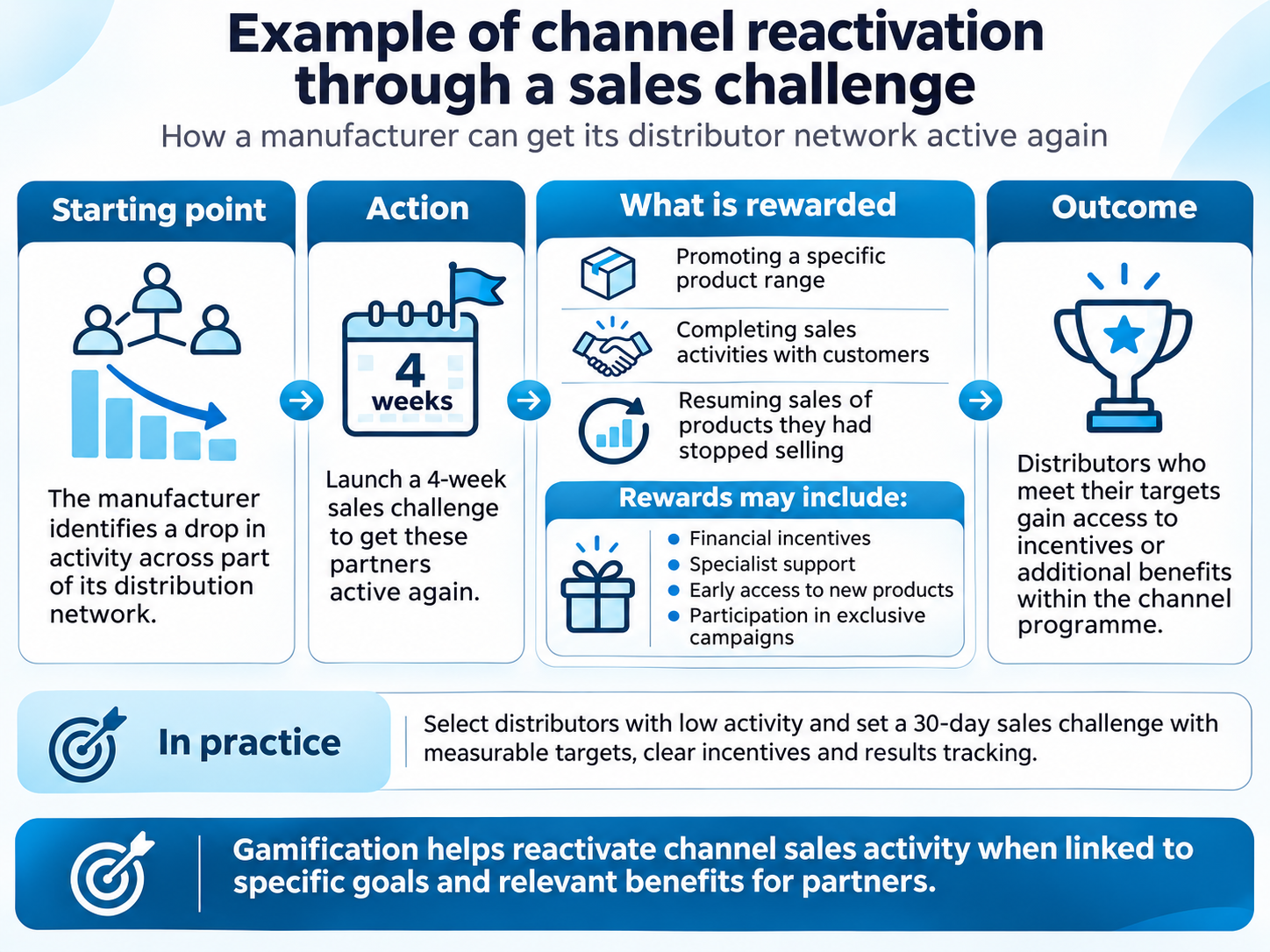
Targets should be tailored to each distributor’s profile. An inactive partner shouldn’t have the same goals as one that regularly generates opportunities.
2. Make progress visible with points, levels and incentives
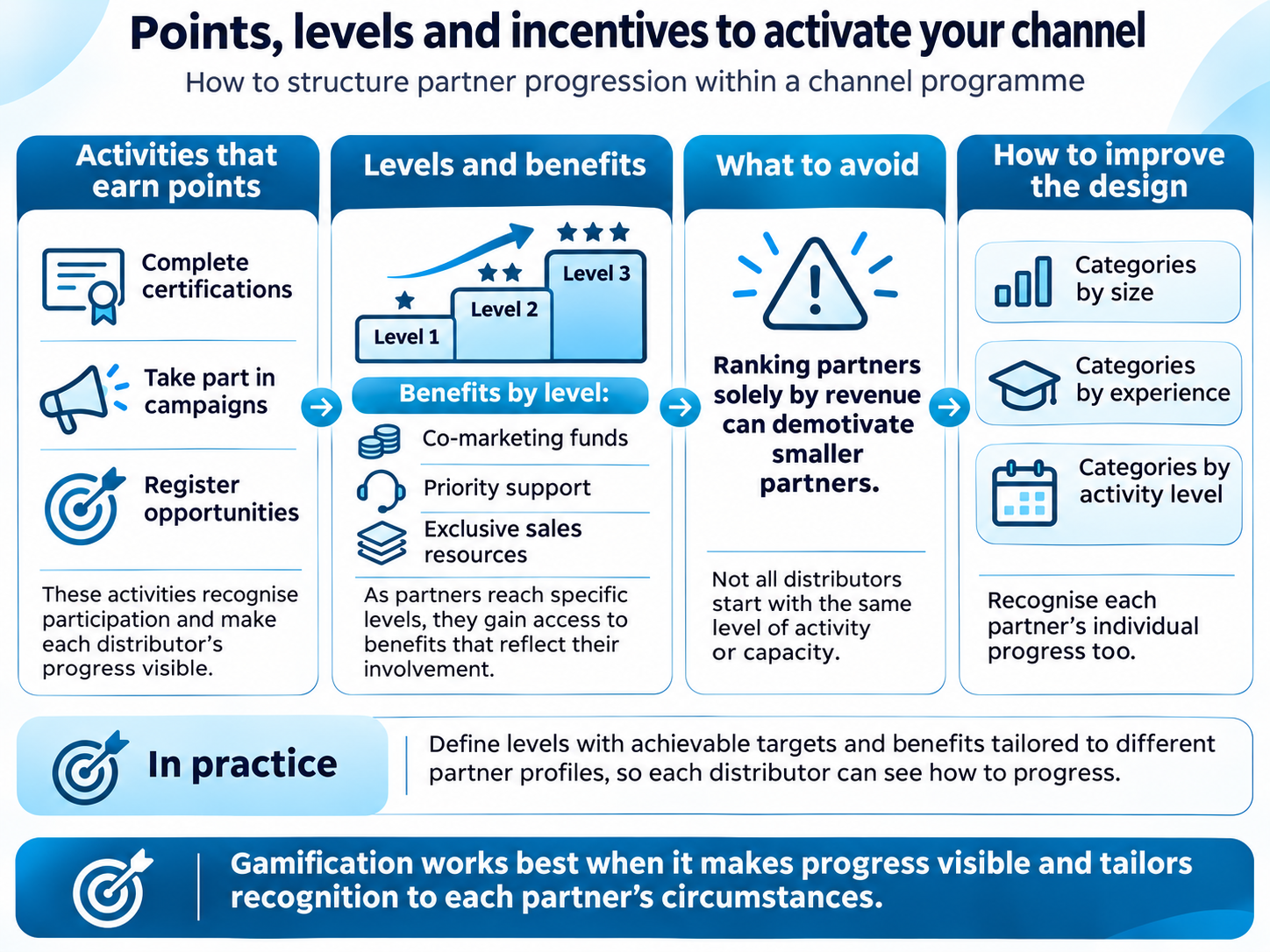
Partners don’t always see how their participation helps improve their business relationship with the manufacturer. They may complete training or contribute to campaigns without clearly understanding the benefits they gain.
Points, levels and reward systems provide a structure for participation and recognise progress within the channel programme.
3. Use gamification to improve sales training
Product knowledge affects distributors’ ability to identify opportunities, present proposals and respond to customer objections.
However, documentation and conventional training don’t always keep them engaged.
Gamification can turn learning into an interactive journey, using quizzes, tiered certifications and sales simulations.
For example, an industrial equipment manufacturer could create sales simulations in which distributors have to deal with real sales situations, such as defending their proposal against a cheaper offer from a competitor.
These activities help partners develop their sales arguments and allow you to assess how they respond to different scenarios.
In practice: combine interactive training, sales simulations and a final assessment to identify which distributors are ready to sell your products.
4. Involve your partners in business decisions
Manufacturers invest resources in developing campaigns and materials for their distributors, but don’t always involve them in the planning.
Yet partners understand their customers’ needs, common objections and the difficulties they face when selling particular products. Drawing on this knowledge helps you develop initiatives that are better suited to each market.
For example, a manufacturer planning a campaign aimed at the hotel sector could work with specialist distributors to identify which products to highlight, which sales messages to strengthen and which materials they need to reach their customers.
In practice: involve your partners in campaign development and let them know which suggestions have been included so they can see the value of their contributions.
5. Set shared goals and recognise results
Individual incentives can encourage participation, but shared goals also support collaboration between manufacturers and distributors.
For example, a manufacturer of energy efficiency solutions could develop a co-marketing campaign with several regional distributors to generate new sales opportunities.
The manufacturer provides the content, materials and sales support, while distributors handle lead generation and follow up on opportunities. The initiative can include collective challenges, team targets or recognition linked to the results achieved.
This way, gamification becomes part of sales activities that can generate business for both the manufacturer and its distributors.
In practice: define a joint campaign with shared responsibilities, goals and incentives. Analyse the results to assess its effectiveness and decide whether to continue or expand it.
How can you measure whether your channel is becoming active again?
Greater participation in training or incentive programmes may indicate increased engagement, but you need to check whether it also translates into sales opportunities.
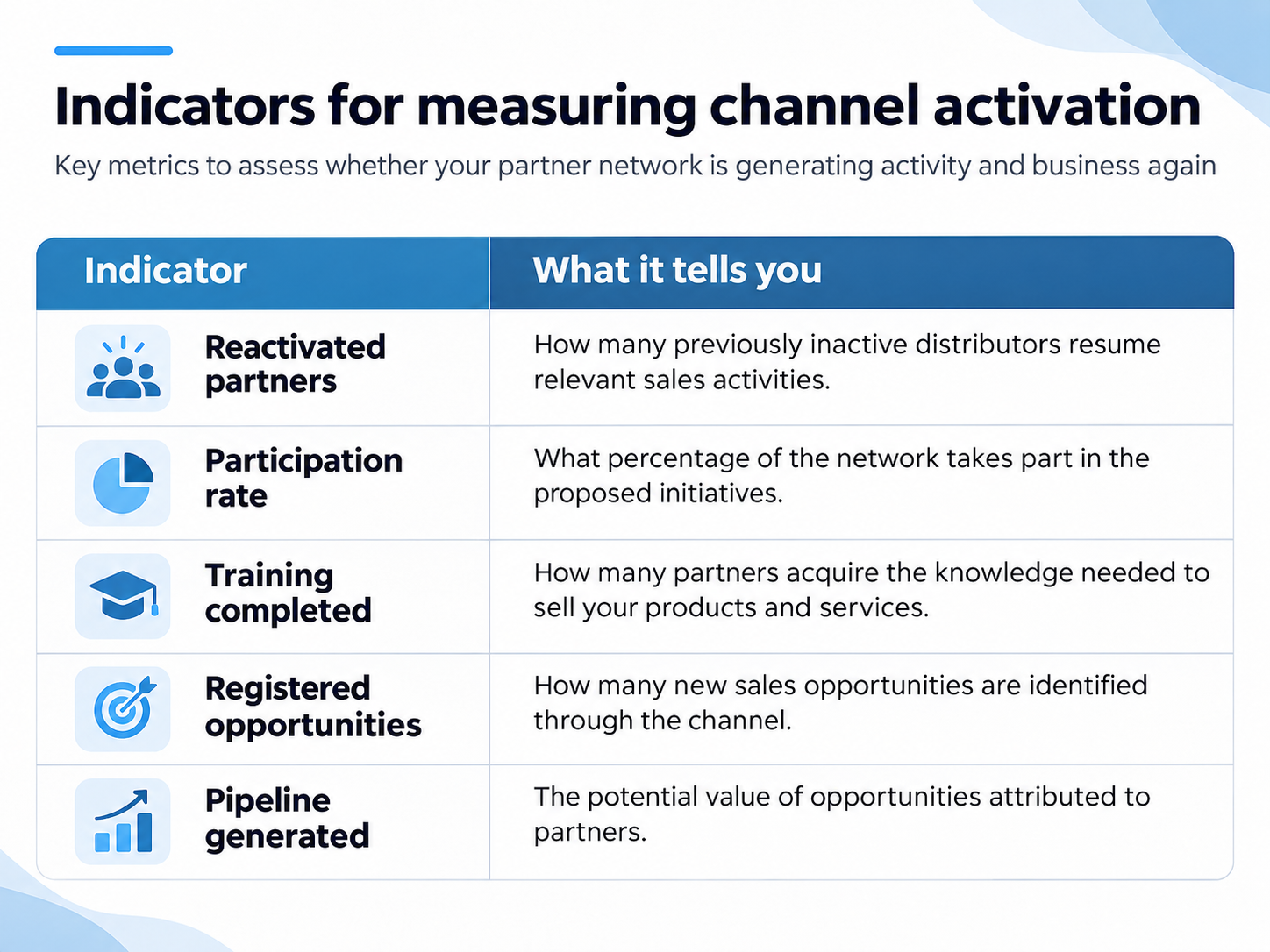
If a campaign achieves high participation but generates very few opportunities, you may need to provide more sales support.
It’s also worth analysing activity once the incentives have ended. The aim is to achieve a sustained recovery in sales performance, avoiding reliance on one-off campaigns.
Does your channel have partners but lack activity?
Having an extensive distributor network doesn’t guarantee that everyone will actively participate in your sales initiatives. To get them involved again, you need to give them reasons to work with your brand and opportunities that help them develop their business.
B2B gamification can encourage this participation through sales challenges, incentive programmes and recognition activities tailored to different partner profiles. Linked to specific objectives, these activities can help you reactivate inactive distributors and strengthen their commitment to your brand.
At PGR Marketing & Tecnología, we design gamification programmes tailored to the needs of each company and its distribution network. We combine game mechanics, incentives and results tracking to encourage partner participation and focus their activity on generating sales opportunities.
Would you like to reactivate your distributor network and increase their involvement in sales activities?
Discover how we can help with our gamification programmes.