



Many incentive programmes fail. Not because they lack rewards, but because they fail to change the right behaviours.
A sales director receives a proposal: “let’s gamify the channel programme”. The first reaction is almost always one of scepticism. Points, badges and leaderboards for selling six-figure technology solutions? It sounds more like a fitness app than a serious B2B strategy.
However, some of the most engaged partner networks and sales teams in the technology sector use precisely these types of dynamics. The difference between a programme that drives participation and one that is abandoned after a few months does not lie in the points or the rewards. It lies in ensuring that every mechanic responds to a genuine business objective.
Because gamification is not just about playing games. It is about getting people to take the actions that help generate more business.
The real problem: many companies incentivise results, but not behaviour
It is common to find channel programmes whose sole objective is to sell more. But selling more is ultimately the result of many actions that take place beforehand.
A partner needs to complete certifications, learn about new products, register opportunities, take part in marketing campaigns, attend events or keep the CRM up to date. If none of these activities are incentivised, it becomes difficult to maintain long-term engagement.
This is where gamification provides real added value.
It is not about turning a serious process into a game, but about applying mechanics such as levels, challenges, missions, visible progress or rewards to encourage the behaviours that genuinely have an impact on the business.
When there is a clear purpose, motivation increases. When there is not, participants perceive the programme as little more than a gimmick and interest quickly disappears.
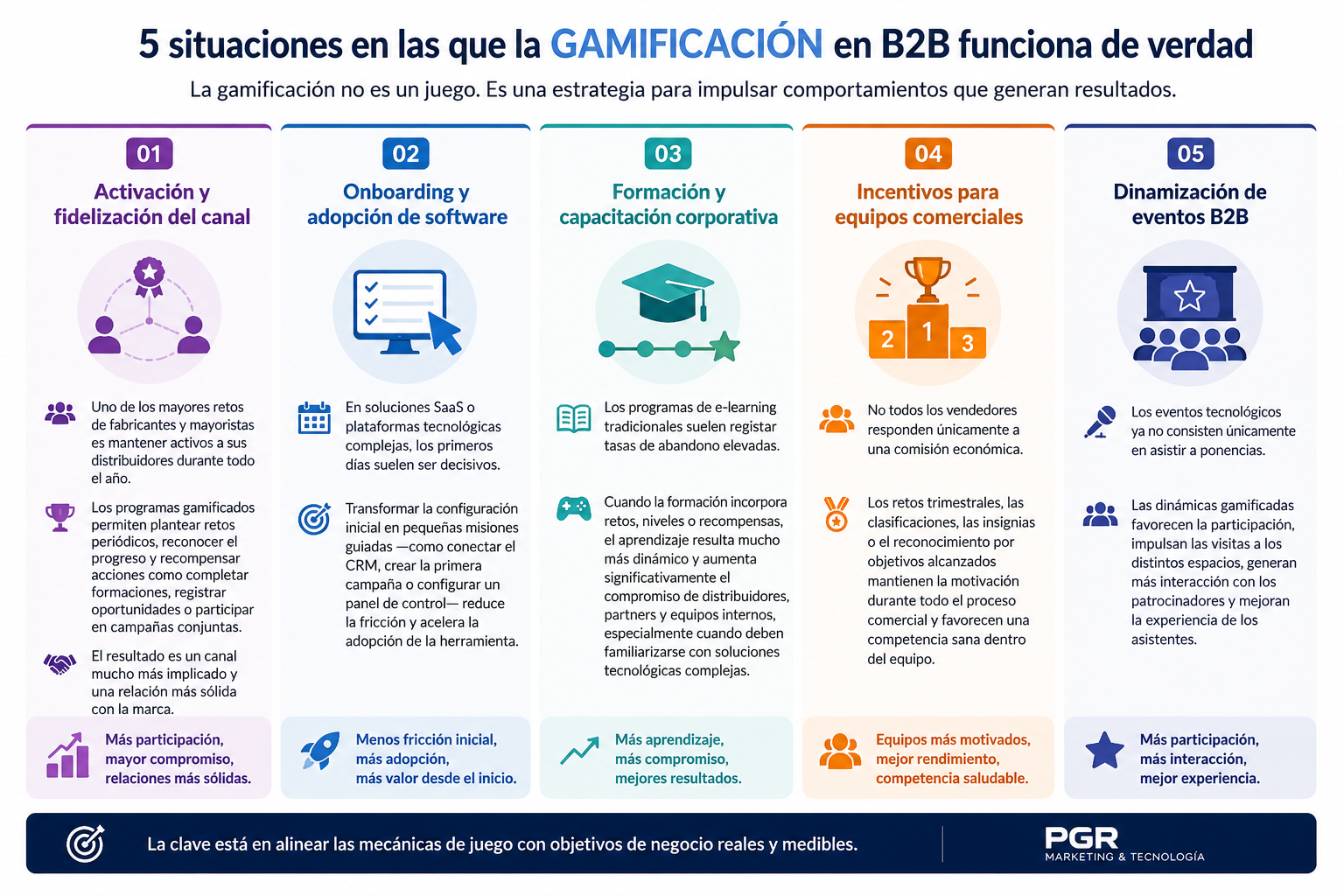
When gamification really works
Gamification delivers excellent results when it is aligned with specific, measurable objectives.
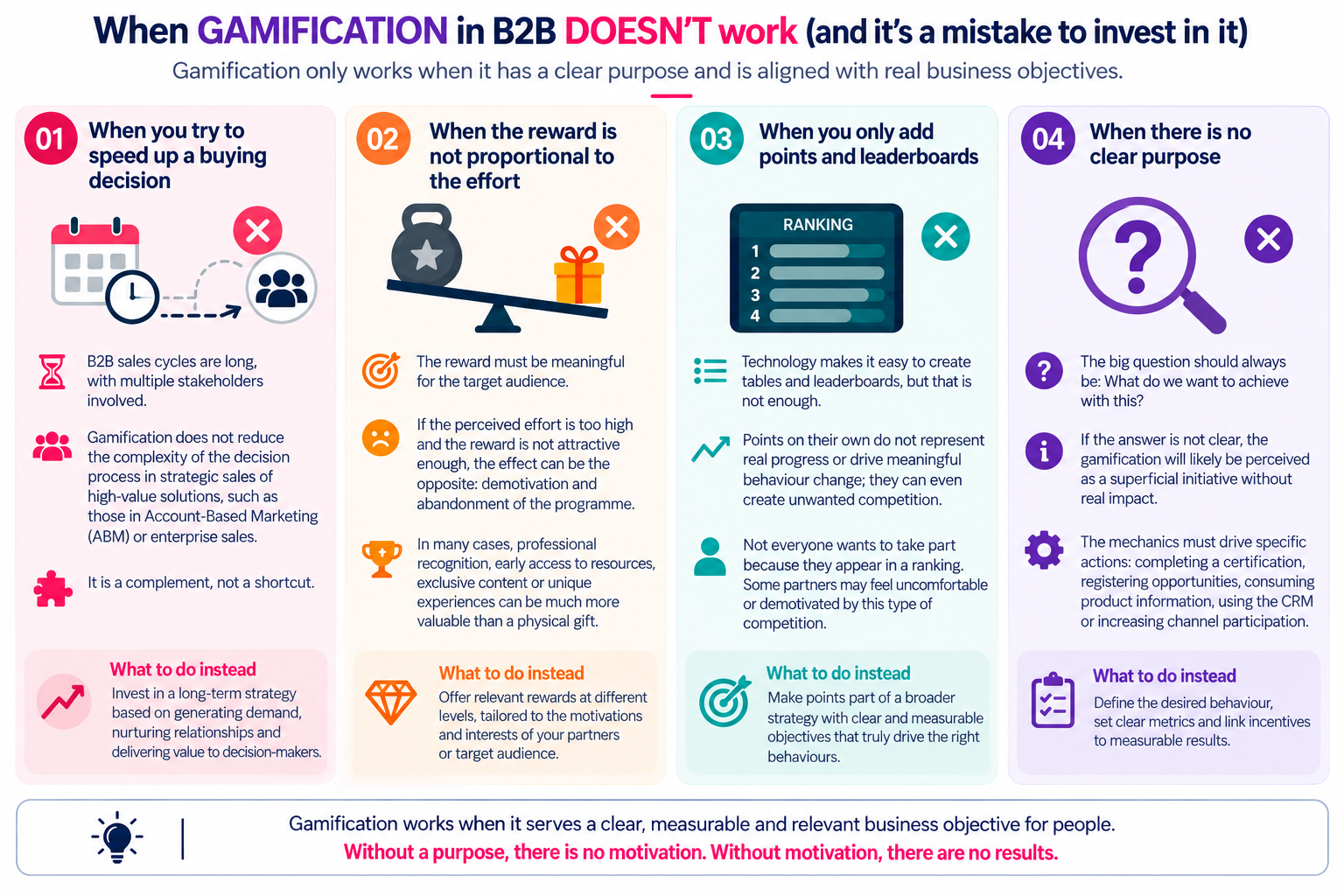
When it DOESN’T work (and investing in it is a mistake)
Knowing when not to use it is just as important.
Before gamifying, answer these four questions
Before launching any programme, it is worth validating the following aspects:
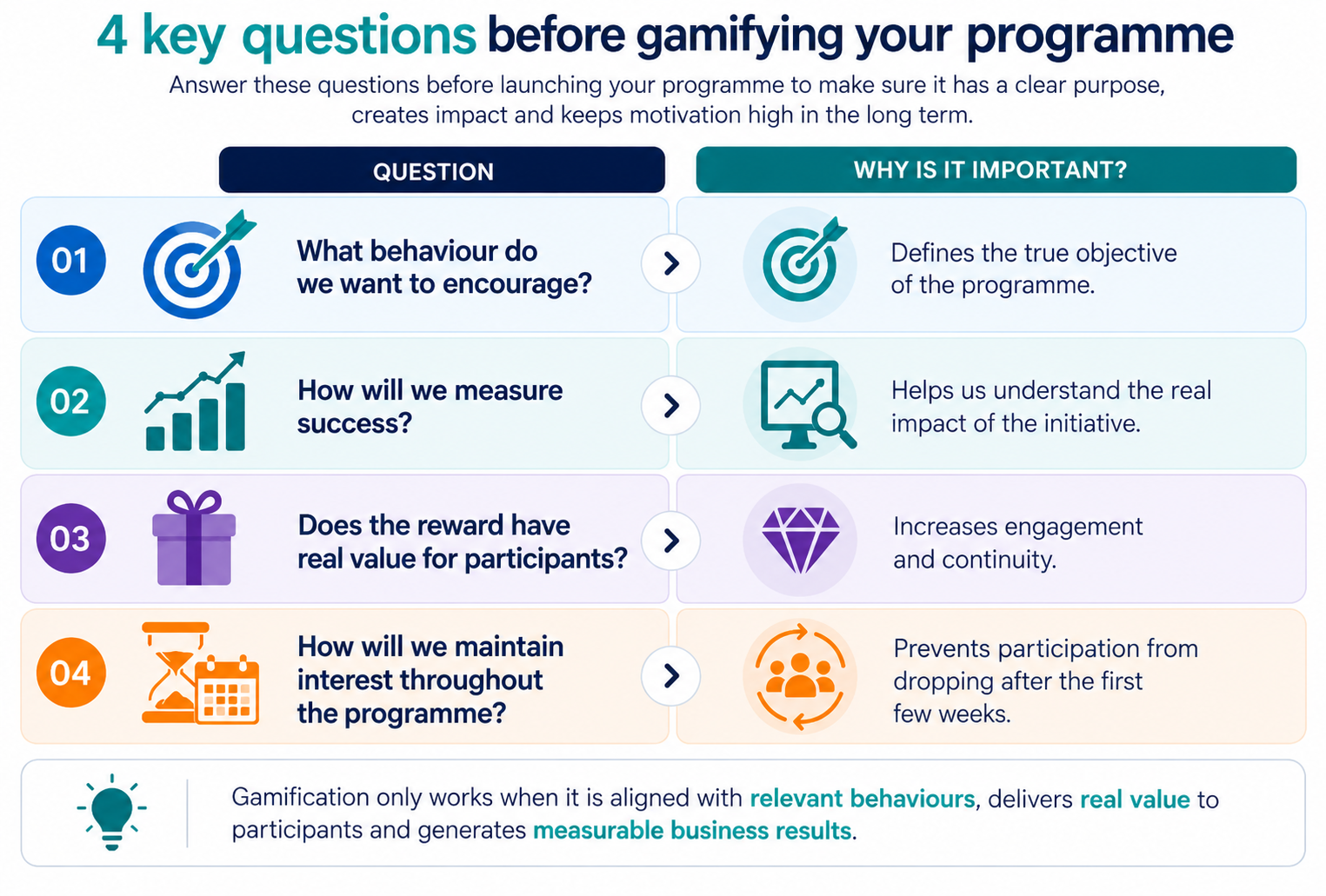
If any of these questions does not have a clear answer, the programme design probably needs to be reviewed.
How we approach it at PGR
At PGR Marketing & Technology, we see gamification as a purposeful motivation system, not as a cosmetic layer of points and leaderboards.
We design programmes aimed at driving specific, measurable behaviours across four main areas:
- Incentive programmes for sales networks, partners and sales teams.
- Lead acquisition and generation through interactive experiences.
- Customer and channel loyalty to maintain long-term engagement.
- B2B and technology event engagement through participation mechanics.
In every case, we pursue the same objective: to align commercial challenges with behaviours that can be measured and that contribute directly to the business.
Because if the impact cannot be measured, we are not talking about strategic gamification. It is simply entertainment.
Is your channel programme still generating the same level of engagement as it did on day one?
If participation has fallen, the same partners always come out on top or the programme is no longer delivering the expected results, the problem may not be the incentive itself, but the way the experience has been designed.
At PGR, we can analyse your channel or incentive programme, identify what is limiting its performance and help you transform it into a tool capable of increasing participation, loyalty and business results.

