



You open a new channel expecting it to add revenue. But just a few weeks later, your sales team starts to notice something strange: accounts that were already theirs are now buying through another route, sometimes even on better terms.
Opening a new channel should grow your business, not redistribute the same sales
The reality is that this problem rarely has anything to do with the channel itself. It has everything to do with how it has been designed.
Launching a new sales route without defining who buys through each channel, what role each one plays and how they coordinate with one another often leads to internal conflict, loss of trust among distributors or partners, and growth that only exists on paper.
The question any company should ask before opening a new channel is not “are we going to sell more?”, but “are we going to reach customers who are not buying from us today?”. That difference is what separates real growth from simply redistributing existing sales.
Why this challenge is becoming increasingly common in the IT sector
The commercial model of most companies has changed: today, in-house sales teams coexist with distributors, partners, marketplaces, eCommerce, channel programmes and even self-service platforms. Each one adds value, but also increases complexity.
The problem arises when a new channel is introduced without an overarching strategy.
If a partner has spent months developing an opportunity and the customer ends up buying directly from the website because they find a better price, the damage goes far beyond that individual sale. Trust within the channel is undermined, putting at risk a relationship that may have taken years to build.
That is why activating a new channel is not simply about opening another route to market. It is about defining how it fits into the overall commercial strategy.
The key is not to sell through more channels, but to expand the market
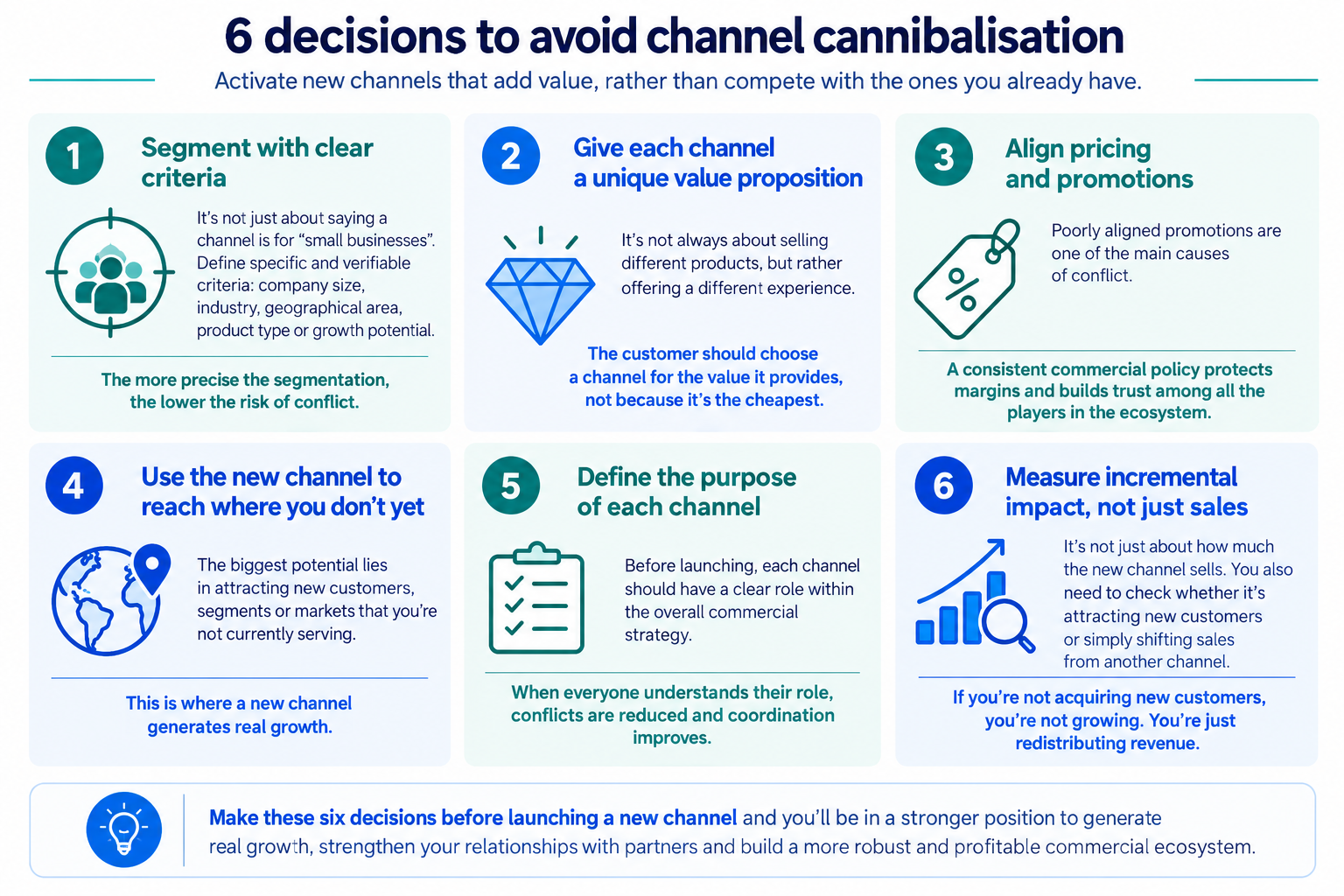
Many organisations see a new channel as a way of selling the same thing from somewhere else. However, the real objective should be different: reaching customers, segments or markets that are not currently being served.
When two channels sell exactly the same product to the same customer under the same conditions, they end up competing with each other.
When each channel has a different purpose, they all contribute to growth.
The difference comes down to one word: incrementality.
Incrementality measures how much genuinely new business a channel is generating. In other words, whether sales are coming from customers who were not previously buying or simply from existing customers who have switched channels.
Put another way, if a company sells one million euros and, after launching an eCommerce channel, continues to sell that same million but some of the sales shift from the distributor to the online store, there is no real growth. Only the place where the purchase is made has changed.
However, if that new channel attracts customers who were not previously buying or gives the company access to markets where it had no presence, then it is generating incremental growth.
That should always be the objective of any channel strategy.
Each channel should have a clear purpose
Not every channel should do the same thing. Each one has a role within the commercial strategy and should provide a different type of value. A partner might focus on developing high-value accounts, the sales team on managing strategic opportunities, eCommerce on facilitating repeat purchases, and a marketplace on attracting new customers or opening up new markets.
What matters is not having more channels, but ensuring that they work in a complementary way. When each one understands its role and the type of customer it should target, conflicts are reduced, coordination improves and the business can grow sustainably.
How we approach it at PGR
At PGR, we believe that a channel strategy does not begin when a campaign is launched. It starts much earlier, by analysing how the organisation currently sells.
That is why, before activating a new channel, we help answer three fundamental questions:
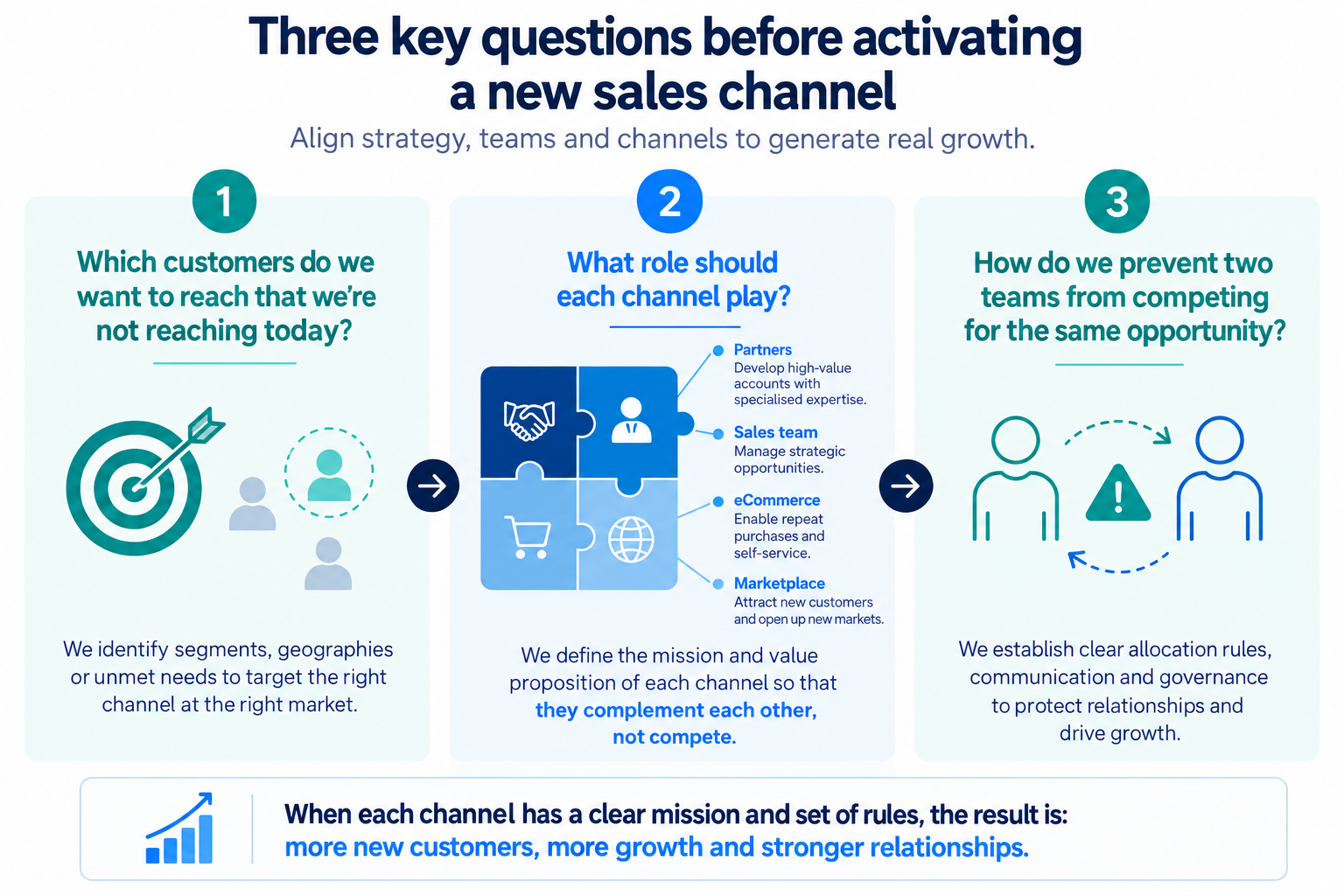
Based on this analysis, we define segmentation criteria, channel allocation rules, specific messages for each audience and metrics that make it possible to measure genuine business growth.
Because opening a new channel is not about selling from somewhere else. It is about generating new opportunities without putting existing commercial relationships at risk.
Is your commercial model ready to grow without creating channel conflict?
Opening a new channel should help you reach markets you do not currently cover, rather than simply redistribute the sales you already have.
If you are designing a channel strategy, bringing new partners on board or strengthening your digital channels, PGR can help you define a commercial model that generates incremental demand, strengthens channel relationships and turns every new route to market into an opportunity for genuine growth.
Our team can help you design a channel strategy tailored to your business objectives.

