Imagine your marketing team has published forty articles in a year. It has launched campaigns, sent newsletters and created new content for social media. Yet website traffic is falling, downloadable resources are barely generating any sign-ups and, when it is time to present the results, the same old question comes up: how many business opportunities have we generated?
And the answer is not entirely clear.
This situation is becoming increasingly common in B2B marketing. Not necessarily because businesses are doing things wrong, but because some practices that used to work are becoming less effective.
Artificial intelligence has transformed content creation, buyers are searching for information differently, and capturing their attention is becoming increasingly difficult.
Looking ahead to 2027, the challenge will no longer be to do more marketing, but to ensure that every activity has a purpose and contributes to generating business.
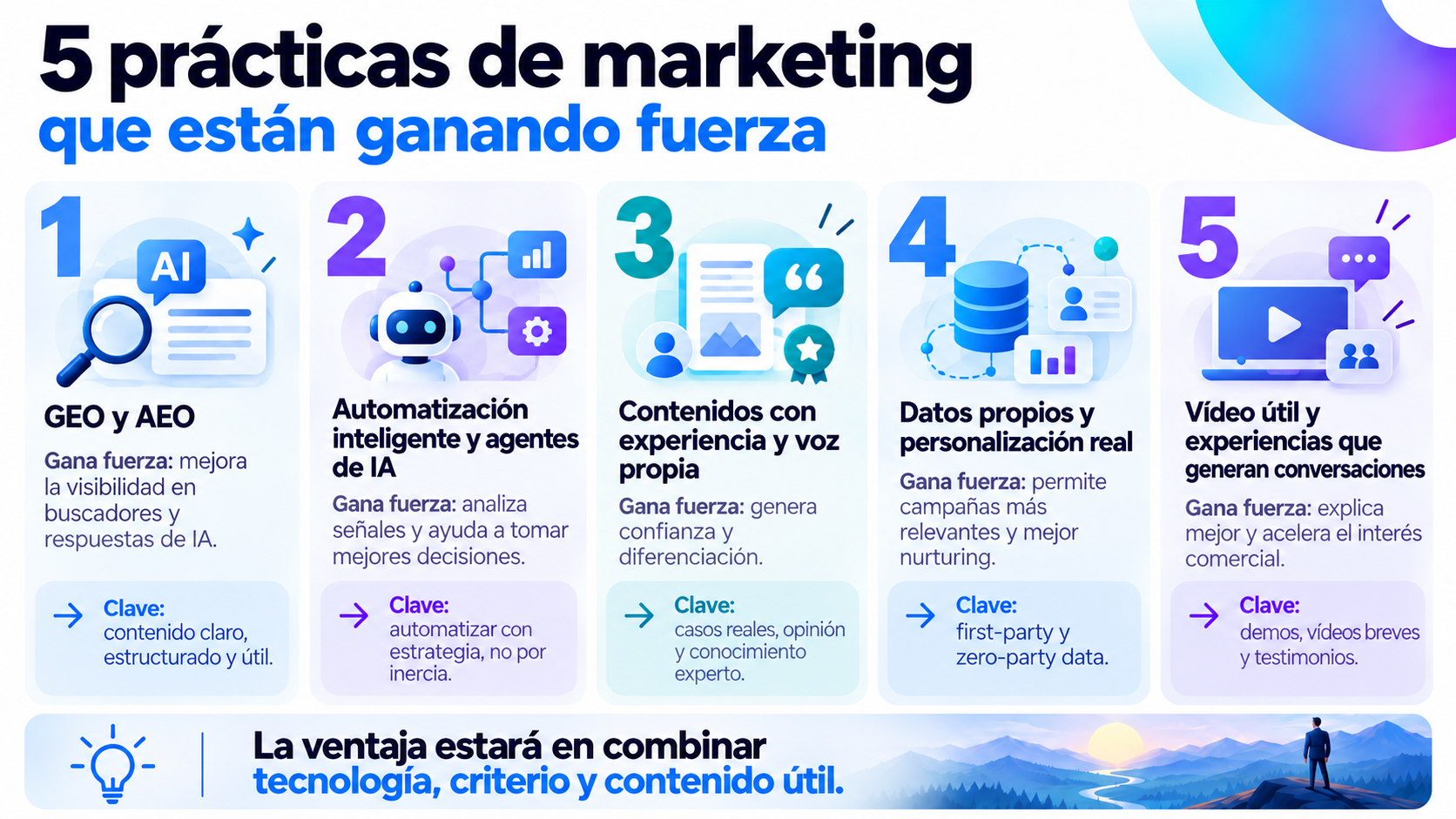
Which B2B marketing practices are becoming less effective?
What will make the difference is knowing what to do, why you are doing it, who you are targeting and how to measure the results. Strategy, sector knowledge and the ability to interpret data will become increasingly important.
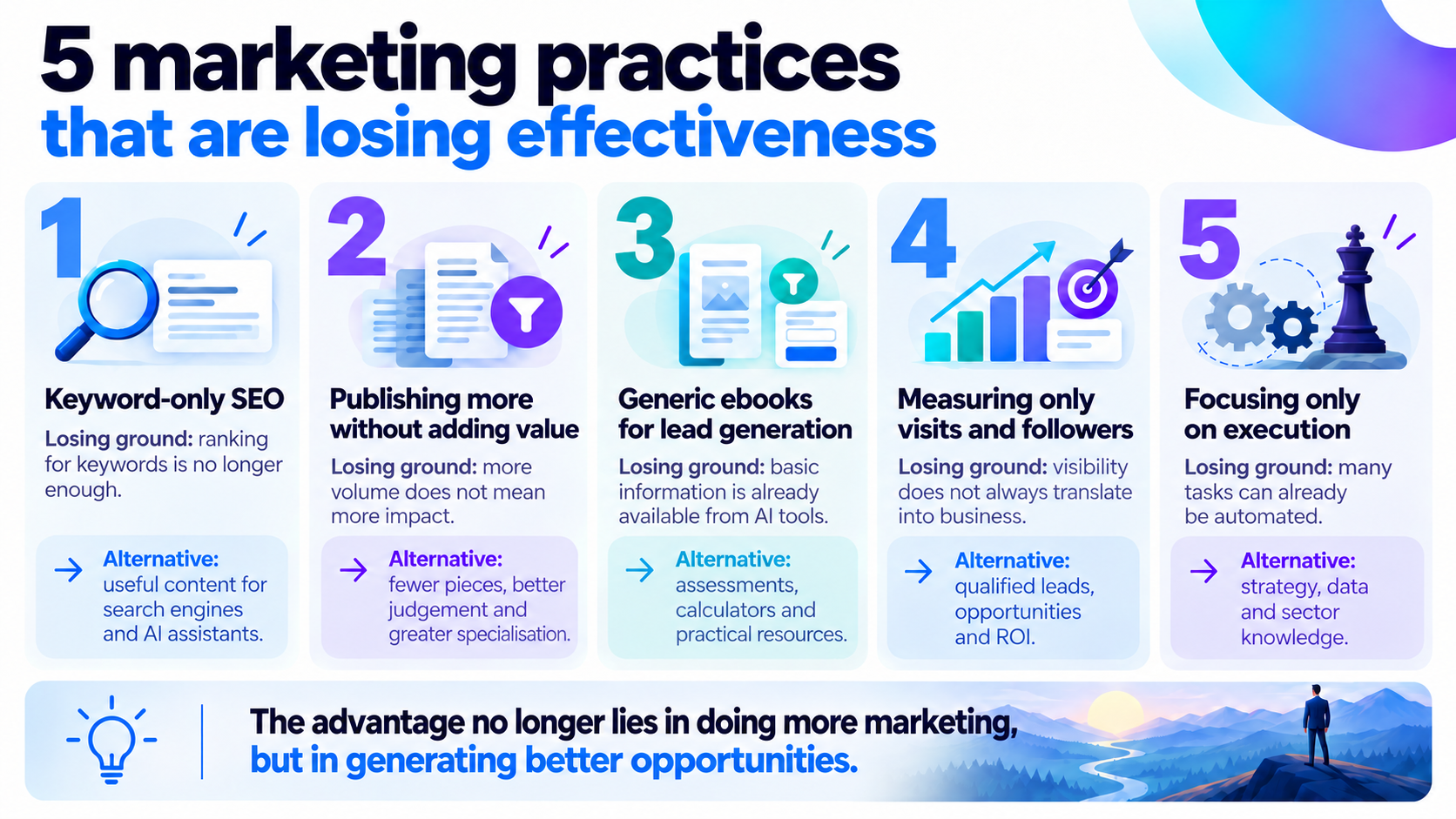
Which B2B marketing trends will gain ground in 2027?
B2B marketing strategies are evolving, and some practices are starting to gain ground over traditional approaches. The key is to make the most of technology while keeping sight of what matters most: understanding your customers, providing value and generating real sales opportunities.
These are the five trends that will shape B2B marketing:
From activity volume to real opportunities: an example
Imagine a cybersecurity company that publishes four articles a week and offers an ebook on threat trends.
It attracts website visits and some downloads, but generates very few sales conversations.
The company decides to change its approach. It publishes less frequently, develops articles that answer specific questions its buyers have, and replaces its generic ebook with a cybersecurity maturity self-assessment.
It also connects the assessment responses to personalised content and agrees shared criteria with sales to identify qualified leads.
Now, it no longer measures only how many people download a document, but how many demonstrate a real need and progress towards a sales opportunity.
The change is about making marketing activities work together towards a shared goal.
Preparing for 2027 starts with reviewing what you do today
Not all current practices will disappear. SEO, ebooks, email marketing campaigns and social media will remain useful tools. What is changing is how they are used, the value they provide and their ability to deliver results.
Problems arise when businesses continue with certain activities simply because that is how they have always done things. Publishing articles every week, sending communications to the entire database or investing in lead generation campaigns can consume a significant share of the budget without necessarily creating new sales opportunities.
That is why, before introducing new technologies or increasing campaign volume, it is worth analysing what is actually working and what needs to change.
This means reviewing which content interests potential customers, which channels attract qualified leads and how the available data is used to personalise communications. It also means checking whether marketing and sales are working towards shared goals or whether each department is still measuring its results separately.
In the B2B technology sector, where purchasing decisions are often complex and sales cycles can last for months, this coordination is particularly important. Capturing a potential customer’s attention is only the beginning: you need to support them with relevant information throughout their decision-making process and recognise when a real opportunity emerges.
Artificial intelligence and automation can make this work much easier, but they need a strategy to guide them. Technology should help you understand your customers better, make better decisions and get more from the resources available, rather than simply increase the volume of marketing activity.
At PGR Marketing & Tecnología, we help businesses in the IT sector connect strategy, creativity, data and automation to develop B2B marketing activities that deliver measurable results. Our approach combines demand generation, qualified lead generation and alignment between marketing and sales to turn interest into sales opportunities.
Preparing for 2027 does not mean following every trend or adopting every new tool that comes to market. It means identifying what your business really needs, building on what already works and adapting your strategy to changes in how buyers search for information, engage with brands and make purchasing decisions.
The goal is not to do more marketing, but to make marketing contribute more to the business.
If you would like to review your strategy, identify opportunities for improvement and plan your next activities with a focus on results, contact PGR. We help you connect your marketing objectives with real sales opportunities.